The MAAD Ecosystem
MAAD is building an ecosystem where everyday products help fund public-benefit research. Not everything needs to be grand or world-changing on its own. Small, ordinary tools—done thoughtfully—can support much bigger systems.
When people ask how to start something meaningful, the advice is almost always the same: just start. Build something real. Learn from it. Then build again.
Our first step wasn’t a platform, a lab, or a grand system. It was a small, ordinary object—built carefully, on purpose.
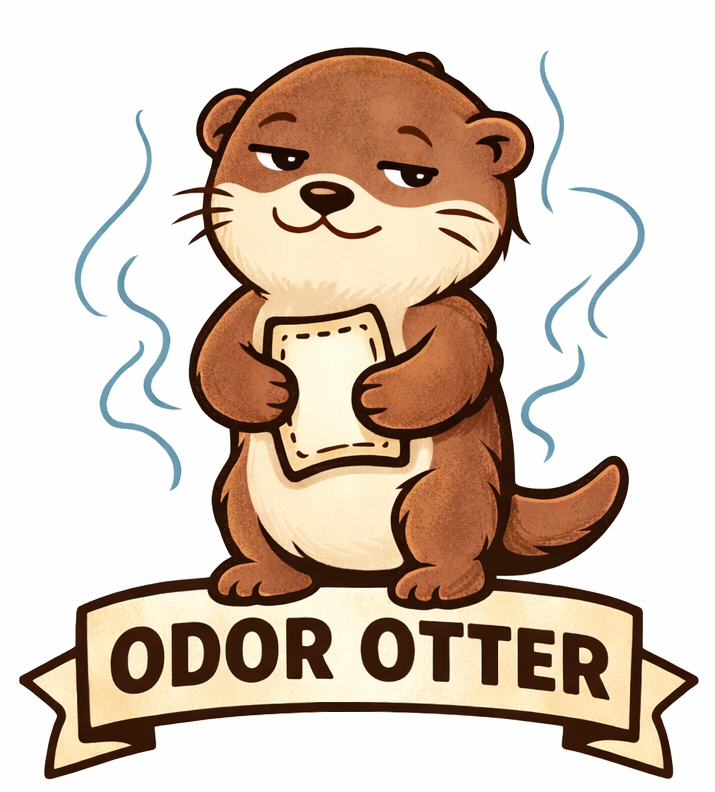
This is Odor Otter.
Built to solve one real problem. Designed to fund many more.
Why Odor Otter?
Odor Otter is our start.
It came from an ordinary problem: forgetting to switch laundry over and ending up with clothes that smell musty—even after drying. Rewashing wastes water, energy, and time. The real issue isn’t the fabric. It’s the molecules causing the smell.
So we asked a simple question: what if we just captured the source of the odor?
Odor Otter uses surface chemistry to bind odor-causing compounds directly. No fragrances. No masking. Just removal. And because it’s regenerated by the heat of the dryer, it’s reusable again and again—low resource, low waste, designed to last.
It’s not a miracle product. It doesn’t change the world on its own. But it makes life a little easier. It reduces waste. And it proves that we can take real chemistry out of the lab and put it into people’s hands.
Odor Otter is small by design. It’s proof that we can build—and that’s how everything else begins.
Revenue Funds Research
The Clam: Microplastic Capture System
Public-Benefit Research Project
Laundry device that captures microplastics during wash cycle, recyclable at end of life. Addresses textile microplastic pollution at source—the washing machine.
Current Status:
- Ideation → Prototyping stage
- Riipen student project active this semester
- Seeking university partnership for development
- Next: Prototype build → external lab validation
Public Benefit:
- Addresses microplastic pollution at source
- Recyclable at end of life (no landfill waste)
- Designed for mass accessibility
- Environmental impact reduction
Every Odor Otter sold directly funds development of The Clam and other public-benefit research projects.
How the Ecosystem Works
1. Consumer Product (Odor Otter)
Accessible, useful product solving real everyday problem. Priced affordably. Sold through MAAD Science LLC.
2. Revenue Generation
Sales create consistent revenue stream. No VC pressure. No exit timeline. Sustainable funding.
3. Research Development (The Clam)
Revenue funds public-benefit research. University partnerships. Student involvement. Proof-of-concept → validation → deployment.
4. Public Benefit Deployment
Proven technology reaches people who need it through MAAD Charitable Fund. Access regardless of ability to pay.
5. Cycle Continues
New consumer products fund new research projects. Each cycle strengthens infrastructure. Compound growth in research capacity.
Why This Model Works
Sustainable
Funded by real products people use—not grants, VC cycles, or donor whims.
Proven & Scalable
Each product proves the model, funds the next project, and expands capacity through evidence.
Aligned Incentives
Useful products create public benefit, build trust, and naturally sustain research.
Where these overlap is the point:
Long-term impact without exit pressure.
Sustainable
Funded by products people actually use—stable revenue without grant or VC cycles.
Proven & Scalable
Each success funds the next project—capacity grows through proof, not hype.
Aligned Incentives
Public benefit builds trust, trust sustains the system—long-term by design.
Where these overlap is the point:
Long-term impact without exit pressure.
MAAD isn’t built to be sold. It’s built to keep working—funding research, improving everyday life, and growing capability over time.
The Pillars of The MAAD House
MAAD works in the surface world. By using surface chemistry, we can upgrade what already exists—materials, products, and infrastructure—without tearing them out or starting from scratch. This makes change faster, more affordable, and more environmentally responsible.
We’re not rebuilding your house. We’re repainting it—changing how it performs, how it interacts with the world, and how long it lasts.
These pillars hold up everything MAAD builds—our products, our research, and the way we choose to show up in the world.
Equity & Dignity
We build tools that treat people like people—access first, not luxury markets.
- • MAAD Glasses for places that can’t wait weeks for custom lenses
- • Long-wear protection that reduces burden and hassle
- • Designs meant to scale in access, not dependence
Low Infrastructure, High Impact
Useful outcomes without fragile supply chains, specialized facilities, or constant replacements.
- • Washable, regenerable air-purifying materials
- • Solar-enabled shelters and covers for practical power
- • Solutions that work in real-world constraints
Public-Benefit Research
We prioritize work that improves health, safety, and environmental outcomes—measured in lives, not hype.
- • Cleaner air and water through capture and remediation
- • Resilience: reduce harm, recover value, close loops
- • Proof-of-concepts designed to become deployable
Affordable Research for All
Discovery shouldn’t require million-dollar equipment or fragile, expensive reagents.
- • Antibody replacements and lower-cost binders
- • Alternatives to ELISA / flow-heavy workflows
- • Chemistry-first methods that reduce equipment burden